
#1 HRV Mistake Most Runners Make
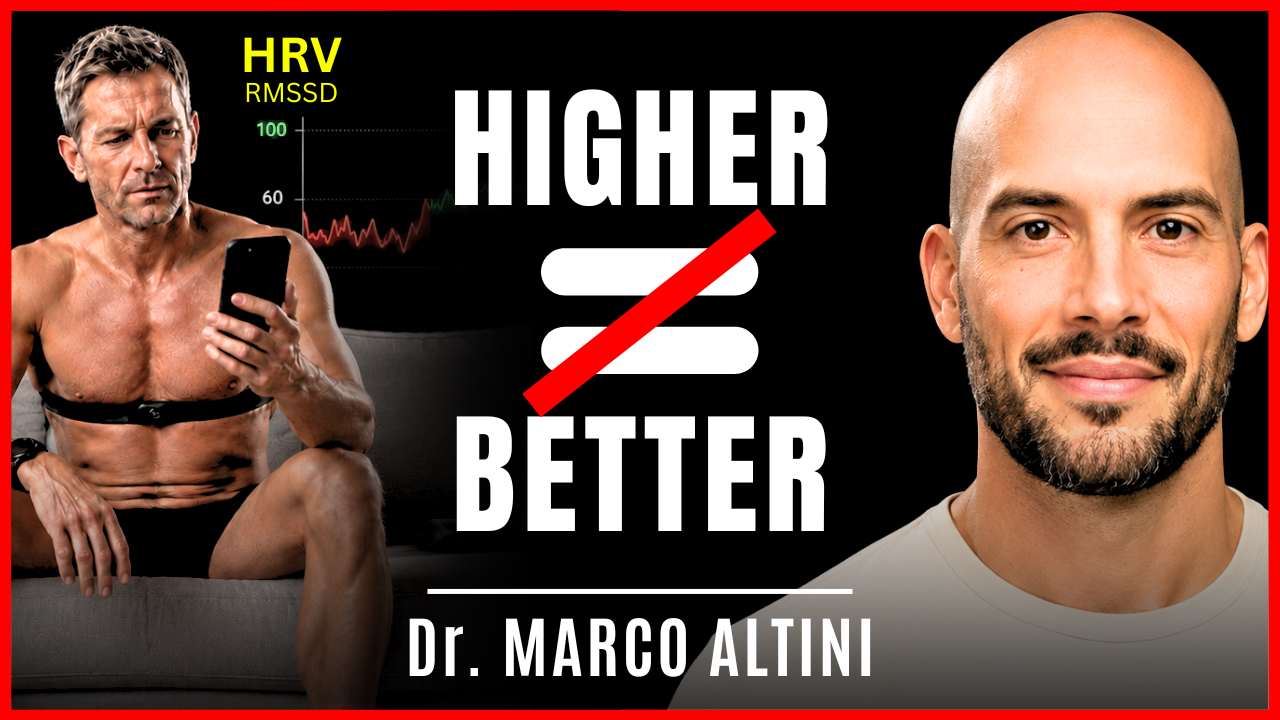
Most runners track HRV, but very few actually know how to use it correctly. In this conversation, Dr. Marco Altini explains what HRV can tell you, what it can’t, and how to use it to make better training decisions without becoming a slave to the data.
Dr. Marco Altini is a physiological data scientist, HRV researcher, coach, and the founder of HRV4Training. Over the last 15 years, he has worked at the intersection of physiology, wearable technology, machine learning, and endurance performance to help athletes better understand stress, recovery, and training readiness.
In this episode, we go far beyond the usual “high HRV is good, low HRV is bad” conversation. We break down how HRV should actually be interpreted in the real world, why resting heart rate still matters, when HRV is useful for adjusting training, and why context matters more than any single number on your watch.
We also discuss how HRV changes with age, how life stress compares to training stress, whether HRV can predict overtraining, how tapering affects HRV before a race, and whether HRV is really a meaningful marker of long-term health and longevity.
Resources:
Marco Altini Substack: https://marcoaltini.substack.com/
Marco Altini personal site: https://www.marcoaltini.com/
HRV4Training: https://www.hrv4training.com/
Coaching: https://marcoaltini.substack.com/p/coachcorner-my-training-philosophy
iPhone App: https://apps.apple.com/app/hrv4training/id686923970
Android App: https://play.google.com/store/apps/details?id=com.asma.hrv4training
If you are a runner or endurance athlete over 40 trying to train smarter, recover better, and make sense of what your wearable is telling you, this conversation will help you understand HRV in a much more practical and nuanced way.
In this episode, we cover:
• what HRV actually reflects physiologically
• why HRV and resting heart rate should be viewed together
• how to know when an HRV change is meaningful
• when low HRV should change your training
• why HRV is more useful for holding back than pushing harder
• whether HRV can help detect overload or injury risk
• how HRV changes with aging
• life stress vs training stress
• whether HRV is linked to metabolic health
• what happens to HRV during taper week
• whether HRV predicts longevity
• morning HRV readings vs overnight wearable data
• how women’s HRV can change across the menstrual cycle
• whether strength training affects HRV
This episode is especially for runners who want to use wearable data intelligently, improve training quality, and avoid misreading HRV trends.
Chapters
0:00 Intro
0:45 Why HRV matters
10:14 Why RMSSD is the standard
15:39 When HRV should change training
20:37 HRV for hard vs easy days
31:15 How HRV changes with age
38:04 Life stress, metabolic health, and seasonality
47:01 Overtraining, tapering, and long-term health
55:16 Morning vs overnight HRV reading
1:04:00 Sex differences, hormones, and strength training
